75 Floral Botanical Wildflowers: Graphics & Illustrations
As a graphic designer who has spent over a decade refining brand identities and creating marketing visuals for small businesses, I approach every new graphic design asset with a critical eye. It is not enough for an illustration to simply look pretty; it must perform under pressure. Recently, I had the opportunity to integrate 75 Floral Botanical Clip Art Wildflowers into a comprehensive branding package for a boutique herbal skincare line. This review breaks down how this collection holds up in real-world client projects, from initial concept to final production.
First Impressions: Mood, Style, and Versatility
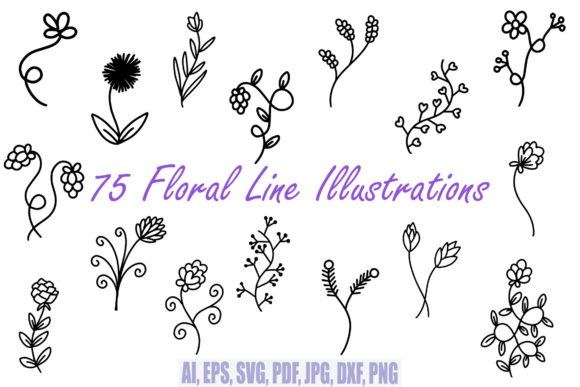
The moment I opened the files, the aesthetic clarity was apparent. These are not overly complex, hyper-realistic renderings, nor are they childish cartoons. They sit comfortably in a sophisticated middle ground—detailed enough to convey organic authenticity, yet simplified enough to remain versatile. The black and white palette immediately suggests elegance and timelessness, making these Illustrations ideal for brands that want to communicate purity, nature, and handcrafted quality.
For a client targeting the wellness and handmade market, this visual language is powerful. The wildflower motifs evoke a sense of freedom and natural beauty, which aligns perfectly with products that pride themselves on organic ingredients. However, the true test of any digital product is its adaptability across various mediums. Does it work on a dark background? Can it scale down for a favicon? I put these assets through their paces.
Performance in Real Client Projects
In the context of brand identity and logo design, these floral elements serve as excellent supporting actors. For the skincare project, I used a single stem illustration to frame the brand name, creating a custom lockup that felt bespoke rather than templated. Because the lines are clean, they pair beautifully with both serif fonts for a traditional feel and sans serif fonts for a modern, minimalist look. If you are working on packaging design, these illustrations add texture without overwhelming the necessary regulatory text or product information.
Beyond static branding, the utility of 75 Floral Botanical Clip Art Wildflowers extends into marketing visuals and social media graphics. I created a series of Instagram posts and Pinterest pins using these botanicals as border elements and background accents. The high contrast of the black ink against white space ensures that the designs pop on mobile screens, where visual hierarchy is crucial. For content creators and bloggers, these assets are a goldmine for creating cohesive Canva template kits that can be reused across multiple campaigns.
Print-on-Demand and Craft Applications
For designers serving the print-on-demand sector or Etsy product sellers, the file format variety is a significant advantage. The inclusion of SVG, AI, DXF, and EPS files means these are not just raster images but scalable vectors. This is critical for t-shirt design, where crisp edges are necessary for screen printing or heat transfer vinyl. I tested the SVG files in Cricut Design Space for a Cricut project involving custom stickers, and the cut paths were clean, requiring minimal manual adjustment.
Furthermore, the PNG files with transparent backgrounds are essential for sublimation design on mugs and tote bags. The ability to layer these wildflowers over colored fabrics or textured papers allows for endless creative combinations. Whether you are designing sticker design sheets for planners or large-format printable design wall art, the resolution holds up well, provided you are using the vector sources for large scales.
Strategic Placement: Where It Works Best
To maximize the impact of these Graphics, consider their placement carefully. They excel in:
- Hero Graphics: Use a cluster of wildflowers as the focal point on landing pages or brochure covers to set an organic tone.
- Decorative Accents: Small sprigs work wonderfully as dividers in editorial design or as corner elements on invitations.
- Packaging Details: Wrap a continuous vine pattern around product labels to create a premium, hand-finished look.
- Themed Collections: Group specific flowers to represent seasons or product lines, aiding in small business branding consistency.
Cautionary Notes: When to Use Carefully
While versatile, these illustrations are not a one-size-fits-all solution. Designers should exercise caution in the following scenarios:
- Small Sizes: Intricate details may disappear when scaled down for favicons or tiny social media profile pictures. Simplify or choose simpler stems for these applications.
- Crowded Layouts: Because the style is detailed, placing too many elements together can create visual noise. Maintain ample white space to let each flower breathe.
- Low-Contrast Designs: Since these are black and white, placing them on dark gray or busy photographic backgrounds can reduce legibility. Always check contrast ratios.
- Corporate Minimalism: For tech startups or financial institutions requiring a stark, ultra-modern aesthetic, these organic shapes might feel too soft or traditional.
Impact on Visual Hierarchy and Brand Trust
Using high-quality design assets like 75 Floral Botanical Clip Art Wildflowers directly influences perceived value. In web design and product mockup presentations, consistent botanical imagery builds an emotional connection with the audience. It signals attention to detail and a commitment to aesthetics. However, poor implementation can hurt visual hierarchy. If the illustrations compete with call-to-action buttons or key headlines, the user experience suffers. Always ensure the flora supports the message rather than distracting from it.
Practical Designer Notes for Commercial Use
Before delivering final files to a client, I always run through a checklist to ensure professional standards:
- Test in Black and White: Ensure the illustrations hold their form without color reliance, which is inherent here but good to verify for photocopy compatibility.
- Check File Formats: Confirm that the SVG and AI files open correctly in your preferred software (Adobe Illustrator, Affinity Designer, etc.) and that layers are organized.
- Inspect Transparency: For PNGs, zoom in to check for halos or jagged edges around the stems.
- Font Pairing: Experiment with script fonts for a romantic vibe, handwritten fonts for a personal touch, or display fonts for bold statements. The neutral black color of the clipart makes it compatible with almost any typography.
- Licensing Verification: Always confirm the commercial license terms. While this bundle is marketed for crafting and commercial use, understanding the limits on print runs or digital redistribution is vital for protecting your client.
In conclusion, 75 Floral Botanical Clip Art Wildflowers is a robust addition to any designer’s toolkit. It bridges the gap between amateur craft supplies and professional creative design resources. For handmade business owners, marketers, and designers looking to infuse their projects with natural elegance, this collection offers the flexibility and quality needed to create polished, engaging, and commercially viable designs. By understanding its strengths and limitations, you can leverage these illustrations to elevate your next project from simple to stunning.